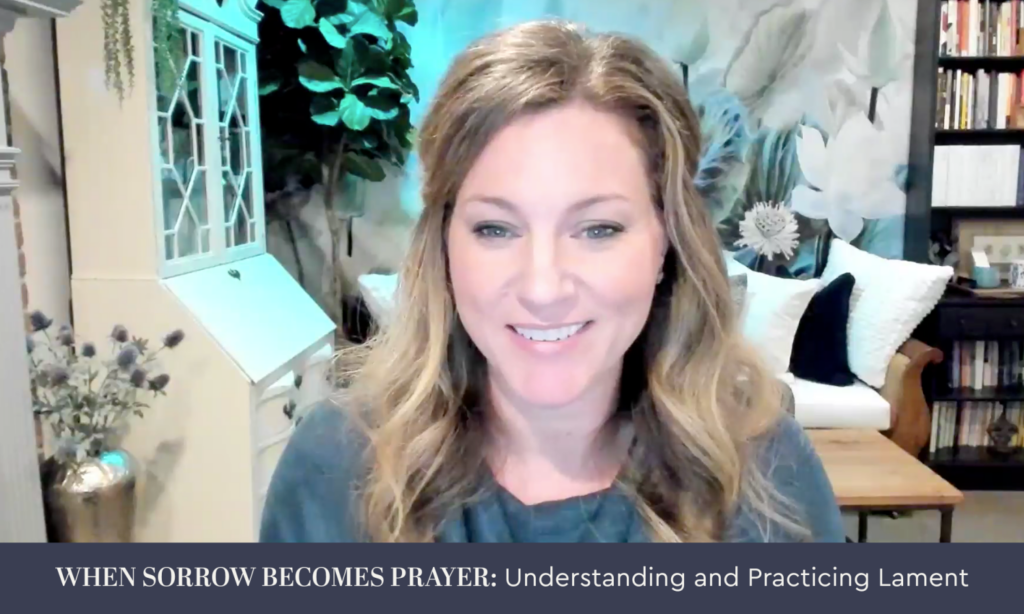

When our family suffered a house fire in 2021, it felt like our entire world had been turned upside down. While my husband, three young children, and I managed to run safely outside (with our new puppy in tow), our home was not able to evade the flames. The weeks and months that followed our displacement were disorienting; we did our best to maintain a daily routine for the sake of the kids. But the process of rebuilding our life and home was incredibly hard. Survival mode quickly morphed into bone-deep fatigue.
“At least no one got hurt—” people would say, “it could have been worse. Someone could have died!” To be sure, I was incredibly grateful that it wasn’t worse—grateful that God let the glow from the fire catch my husband’s attention. And I was grateful He kept the ceiling from collapsing until we had escaped; grateful He sent neighbors and firefighters and church family to come to our aid. There was so much to be grateful for—and we were. But that fact didn’t ease the difficulties we faced in the wake of the loss.
How does God’s Word help us think more deeply about responding to hardship—especially when it seems “lesser” than “worse” possibilities? Are we wise to pit actual suffering against hypothetical outcomes? And does doing so help people draw near to God in their need? As we care for people in these situations, Scripture shows that we needn’t bypass reality for the sake of thanksgiving. We can help them to acknowledge what’s hard in their life without betraying gratitude for God’s grace.
“At least no one got hurt—” people would say, “it could have been worse. Someone could have died!” To be sure, I was incredibly grateful that it wasn’t worse—grateful that God let the glow from the fire catch my husband’s attention. And I was grateful He kept the ceiling from collapsing until we had escaped; grateful He sent neighbors and firefighters and church family to come to our aid. There was so much to be grateful for—and we were. But that fact didn’t ease the difficulties we faced in the wake of the loss.
How does God’s Word help us think more deeply about responding to hardship—especially when it seems “lesser” than “worse” possibilities? Are we wise to pit actual suffering against hypothetical outcomes? And does doing so help people draw near to God in their need? As we care for people in these situations, Scripture shows that we needn’t bypass reality for the sake of thanksgiving. We can help them to acknowledge what’s hard in their life without betraying gratitude for God’s grace.